Employer Branding in Sri Lanka: Evolution of Social Media and Embracing the Role of Team
Role of Team Member Employer branding is not just about being an employer; it’s about being a partner, a mentor,


Role of Team Member Employer branding is not just about being an employer; it’s about being a partner, a mentor,

“HR is more than a department; it is a fundamental pillar of business operations.” In the realm of business operations,

SLTC Research University (Sri Lanka Technology Campus) has taken a significant step towards enhancing student career prospects by partnering with

In today’s dynamic work environment, effective HR management requires more than traditional practices—it demands strategic foresight, innovative thinking, and a

Being an HR leader isn’t just about managing employees; it’s about fostering business growth and innovation. Manoj Rathnayake, the Group

In today’s rapidly evolving business landscape, the essence of effective leadership extends beyond traditional metrics of success. Leaders are no


The landscape of human resources is rapidly evolving, driven by the increasing influence of data. Leading this transformation is Sampath Thrimavithana, who serves as the Chief Human Resources Officer at Surge Global and is also the Founder of Sponge Global Learning. With over two decades of experience in technology and talent transformation, he has witnessed how data can fundamentally change HR practices across various industries.
This feature delves into Sampath’s insights on leveraging data to enhance HR operations, streamline organizational functions, and ultimately drive success not just for individual departments but for entire companies and industries on a global scale. His expertise provides a roadmap for how embracing AI and analytics can prepare HR for the challenges and opportunities of tomorrow.
Sampath’s journey into HR was not straightforward. Initially grounded in finance and marketing, his first role in customer service at a bank seemed to set him on a different course. However, his enthusiasm for technology opened new avenues. Working on digital transformation initiatives exposed him to IT systems and the critical human factors involved in business change.
One key moment in his career was when he was tasked with implementing change programs for clients whose ERP systems were failing.
We realized that organizations weren’t ready for the technology,” Sampath recalls. “That’s when I got invested in the people aspect—how talent development and human transformation play an integral role in adopting new technology.
This sparked a shift in his focus toward HR, a discipline that married his interests in both people and technology.
As Sampath climbed the corporate ladder, holding senior roles at organizations such as HSBC, Abacus (Sabre), SLINTEC and Virtusa, he began to understand how data driven HR could be the way forward to contribute to broader business objectives and challengers.
“Some think HR is only soft , but HR is still very much about numbers at the top level,” Sampath often states, referencing one of his favorite quotes, by Edward Deming : ‘God I believe , others should show data.’ His understanding of HR is deeply rooted in data analytics, which, he believes, makes it easier to “connect the dots and see the patterns” and deliver data driven insights for organizations.
Here’s how data can be used to transform key HR functions, as Sampath explains:
One of Sampath’s core messages is the need for HR departments to cultivate a data culture. According to him, many organizations, particularly smaller ones, have yet to realize the full potential of data in HR.
Larger companies already have the infrastructure for data analytics, how are they going to use the vast amount of data to make insights is the problems for them, but smaller businesses need to start thinking about how they can start gathering data and what affordable technologies to use ,
he explains. For organizations to mature in their use of data, they need first the right mindset and the toolkit.
Sampath advocates for starting small. “Some tools are even free, starting with something like Google Analytics or a simple time-tracking apps like clockyfy,” he suggests. “Once you see the value, you will be more inclined to invest in more sophisticated solutions with higher analytical capabilities.”
Creating a data culture involves not just implementing tools but also empowering employees to use them effectively. This means training staff in data visualization and analysis and learn concert them to persuasive narratives.
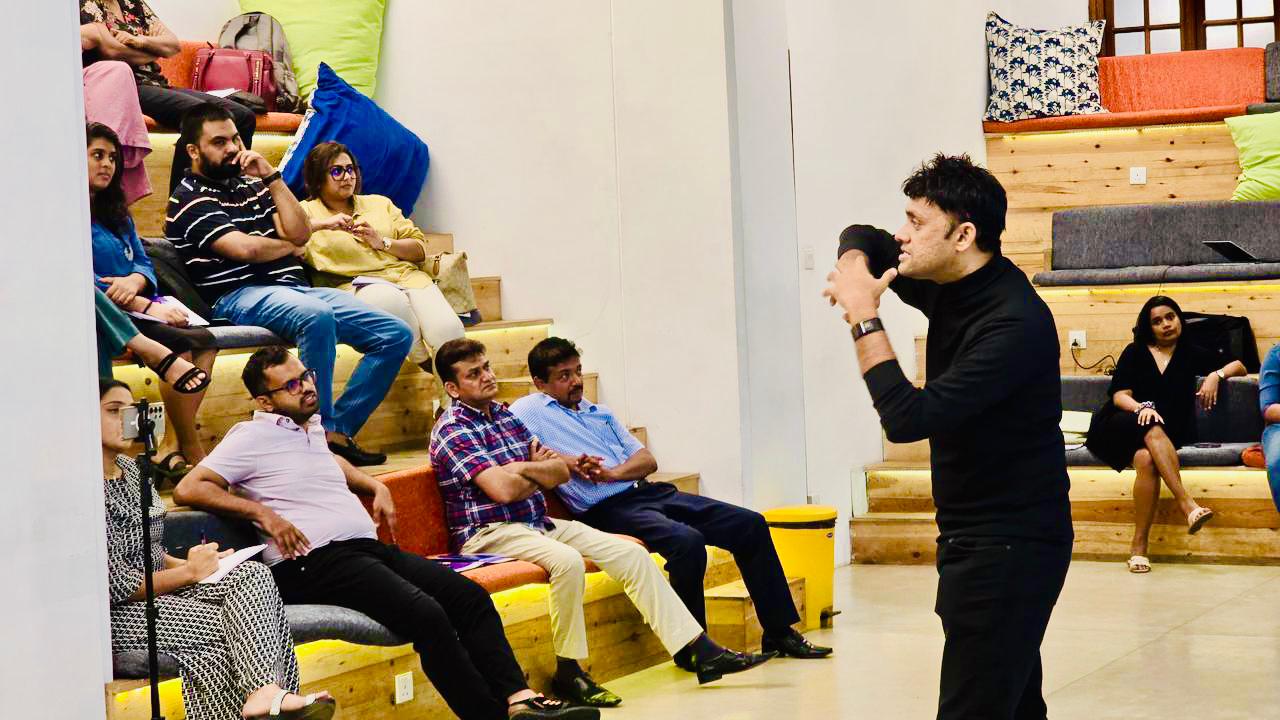
One of the most exciting frontiers in HR, according to Sampath, is the use of Generative AI. He acknowledges that many HR professionals are wary of AI due to fears of job losses, but he argues that the opposite is true. “Generative AI can help HR professionals do their jobs better, not replace them,” he asserts. AI will help us to save time from operational matters and give more time to think or even to spend quality time with humans .
“Chatbots can now understand natural language, we can train them with our proprietary content. Sampath explains. Also over a period of time the comments on corporate social platforms and FAQs will help us to do sentiment analysis of employees which will be much more accurate than standard surveys we do. This can provide HR with invaluable insights into employee morale and engagement, allowing them to take corrective actions before issues escalate.
Sampath also envisions a future where hyper-personalization in HR is the norm. Using predictive models, HR departments will be able to tailor benefits, rewards, and career development programs to individual employees. “We are moving toward an era where every employee will have a personalized career roadmap, with data guiding their development at every step,” he says.
Also functions like performance management can benefit when you take the human element out of performance evaluations. This will eliminate human biases. I recall that we had a system where Engineeres codes , accuracy and velocity has been automatically measured by a system without the intervention of a tech lead evalting performance. But human interaction is definitely useful to coach, mentor, and develop employees based on these insights ,” Sampath explains. It’s this blend of technology and human touch that will define the future of HR.
Despite the emphasis on data, Sampath points out that HR remains fundamentally a people-oriented function. “You can not lose sight of the human element. Data is there to support us, not replace us,” he says. He envisions a future where AI and data analytics work hand-in-hand with human intuition, creating more meaningful conversations and deeper interpersonal connections. Concluding, he advised to embrace data, stay curious, and continue learning, “Every person’s job will evolve. The way we do things is going to change, and HR is no exception. The key is to keep an eye on how technology is changing and make sure to reskill and upskill accordingly.”


